

A First-Timer’s Guide to WWOOFing: Everything You Need to Know
WWOOF stands for World Wide Opportunities on Organic Farms. The concept is straightforward: it connects organic farmers and growers with people who want to learn about sustainable agriculture.
WWOOF is built entirely on a non-monetary exchange. You do not pay for your stay, and the host does not pay you a wage. Instead, WWOOFers help with the daily farm tasks, and the host provides your meals and a place to sleep. It is an immersive way to learn how to grow food, care for land, and understand what goes into local food production.
Whether you want to learn permaculture, master animal husbandry, or understand the fundamentals of local food production, this comprehensive guide covers everything you need to know before diving into the world of WWOOF!
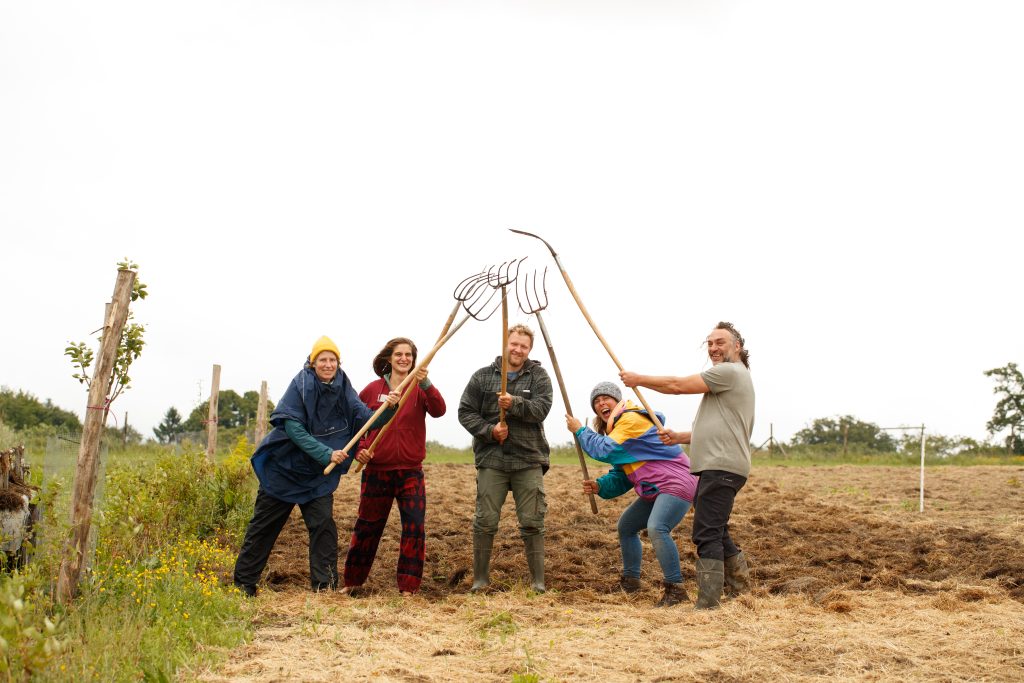
1. Understanding WWOOF: The Basics
WWOOFing is an educational and cultural exchange, not a “work-trade”. Visitors – or “WWOOFers” – provide hands-on help on an organic property while receiving room and board from their host.
Every host site is a little different, but the core structure of WWOOF remains the same across the globe.
- How it started: WWOOF began in the UK back in 1971 when a secretary in London named Sue Coppard wanted a way to get out to the countryside and support the early organic movement. What started as a few weekend volunteer trips snowballed into a massive global network. Today, WWOOF organizations operate in over 50 countries, united by the Federation of WWOOF Organisations.
- The experience: This is an opportunity to step away from screens and do real, physical work. You are there to get your hands dirty and learn by doing. Depending on the season and the farm, you might be feeding livestock, setting up irrigation, pruning fruit trees, weeding vegetable beds, or learning how to make cheese and sourdough bread.
- The time commitment: Visit lengths can vary. You can WWOOF locally with a farm near you on the weekend, or stay somewhere for a whole season! It’s up to you and the host farmer. While on the farm, WWOOFers typically help out for around a half-day (or 4-5 hours), with appropriate days off. Farm schedules vary, so these details are discussed individually with each host, before a visit happens.
2. How to Get Started: Step-by-Step
WWOOF is a decentralized network, with locally run, national organisations around the world. National WWOOF organisations are non-profit associations, with staff living locally, knowledgeable about their country, and speaking the local language.
You cannot buy one global membership and go anywhere. For this reason, you must first choose where you plan to WWOOF and become a member of the organisation in that country. Here’s the step by step –
- Pick a country: Look at the official destinations directory to see where WWOOF organizations exist and decide where you want to focus your farming education. Starting locally is a great place to begin!
- Join the local network: Sign up as a WWOOFer on the country’s website for the country you want to visit. If you want to farm in two different countries, you will need to buy a separate annual membership for each one to access their directories; unless you’re WWOOFing via WWOOF Independents (WWOOF Independents is run by FoWO to create WWOOFing opportunities in 80+ countries around the world that do not have a national organisation.)
- Find a host: Read through the host profiles carefully and check the reviews left by past WWOOFers. Some hosts are small families growing food just for themselves, while others are larger, commercial organic vineyards or cooperative eco-villages.
- Talk about expectations: Message potential hosts directly through the platform. Be clear about how long you want to stay (stays can range from a few days to several months), what projects they have going on during your visit, and what the sleeping arrangements look like.
- Sort your own travel: WWOOF organizations do not handle logistics or placements. WWOOFers are responsible for getting to and from the farm (booking transportation, buying tickets, and securing any required visas).
3. Planning and Arranging Your Visit
Once you have joined a national WWOOF organization, the next step is finding a farm that aligns with your goals and securing your stay. Organising the best possible WWOOF experience is all about utilizing the search tools, communicating your expectations, and asking the right questions ahead of time.
Use the Advanced Search The host directory is vast, but the advanced search feature makes it easy to narrow things down. You can filter hosts by region, length of stay, specific diets, number of WWOOFers (if you are traveling in a group), and daily activities. These filters help you find hosts who welcome visitors during your travel window and offer the exact experiences you are looking for.
Start With Clear and Honest Communication When you find a host profile that feels like a good match, it is time to reach out. Before you do, make sure your own WWOOF profile is fully up-to-date. Send the host a personalized message detailing what you are excited to learn, what skills you can share, and why you want to visit their farm in particular.
Ask the Important Questions Message back and forth a few times to get a feel for the host. We highly recommend scheduling a phone or video call before finalizing your stay to ensure the arrangement suits both parties. During your chat, be sure to ask these key questions:
- What will I be learning? One of the best feelings is leaving a farm with your head bursting with new knowledge. Clarify the skills you will walk away with, and let them know if you have any expertise you are excited to share in return!
- Where will I sleep and what will I eat? Accommodations and meals vary widely. Whether you need a private room and a vegan diet, or you are happy pitching a tent and eating whatever is served, identify your baseline needs and ensure the host can meet them.
- What is the social life like? Some farms are bustling, community-centric hubs with people coming and going and group activities in the evenings. Others are highly tranquil and quiet. Consider which environment you prefer.
- How flexible is the daily routine? Some farms run on a strict, predictable schedule, while others take a more free-flowing approach depending on the day’s unpredictable needs. Make sure their operational style matches your work style.

4. Realities of Farm Life (The Do’s and Don’ts)
Once you have found the right host and confirmed your stay, it is time to mentally prepare for the daily experience. Farming is unpredictable, physical, and definitely not a vacation. To ensure both you and your host have a successful exchange, keep these basic realities in mind before you arrive.
| What to DO | What to AVOID |
| Define your goals early: Let hosts know if you want to focus on a specific skill, like irrigation setup or vegetable propagation. | Don’t treat it like a free hotel: A successful stay requires a proactive work ethic, dedication, and genuine accountability for your tasks. |
| Be flexible with daily tasks: Farming is unpredictable. A sudden storm or equipment breakdown can alter the day’s schedule instantly. | Don’t expect luxury lodging: Accommodation varies. You might stay in a guest bedroom, an RV, a rustic barn loft, a yurt, or a more primitive campsite. |
| Communicate boundaries clearly: Be honest about your physical capabilities, allergies, or comfort level with specific tools before tasks are assigned. | Don’t compromise on safety: Use common sense. If you do not feel qualified to operate machinery like a tractor, politely decline and ask for direction. |
5. The Essential Packing List
You’ve made it this far in the guide and you’re getting geared up to go WWOOFing – but what does one pack?
When you are working outside for hours at a time, having the right gear makes a massive difference in your daily comfort. However, it’s strongly recommended to pack light! Just bring the essentials. For life on the farm, you’ll often end up wearing the same uniform that you can keep dirty day after day! Focus on durability and utility.
One other key note before checking off this list: ask your host what they can provide! Oftentimes, hosts may be able to provide the basics like work boots, gloves, rain jackets, etc. Ask in advance what they’ll have there to keep you load light.
Clothing and Boots
- Quick-dry layers: Avoid packing nothing but heavy cotton or denim. When clothes get caked in mud, sweat, or plant sap, cotton takes days to line-dry. Lightweight synthetics or wool blends are much better because you can wash them in a sink and have them ready by morning.
- Waterproof boots: Early morning chores often means walking through high weeds covered in thick dew. Sturdy waterproof work boots or standard rubber boots are absolutely essential if you want to avoid blisters and cold feet.
- Work gloves: Pack a tough pair of leather gloves for moving rock or wood, and a flexible, rubber-coated pair for weeding and handling delicate plants.
- Real rain gear: Crops still need to be harvested when it rains. A high-quality, fully waterproof rain jacket with a hood will keep you from being miserable in a storm.
Health and Protection
- Sun defense: Bring a wide-brimmed hat that shades your neck, polarized sunglasses, and water-resistant sunscreen. Spending eight hours directly in the sun will catch up to you quickly.
- Eco-friendly bug repellent: Farms are active ecosystems, which means insects are part of the deal. Because you are working on organic land, it’s recommended to leave harsh chemical sprays at home so you do not introduce toxins to the crops, soil, or beneficial bugs. Opt for natural repellents if you can!
- First-aid basics: Typically, hosts keep first-aid kits on hand, but it is smart to bring your own personal supply of bandages for the inevitable blisters, antibiotic ointment, and any regular vitamins you take.
- A solid water bottle: Hydration is important, especially when you spend lots of time active outside! You will get thirsty working out in the fields, and the walk back to the main house can sometimes be a long one. Bring a large, durable, insulated bottle that you won’t mind getting roughed up.
Extra Stuff!
- “Off-duty” clothes: You will want to get out of your dirty work gear after farm work. Pack just one simple, clean set of comfortable clothes so you can sit at the community dinner table without tracking field mud inside.
- One reliable recipe: You may be asked to help cook for the household or other WWOOFers at some point. Have one simple, hearty meal memorized that you can easily scale up to feed a crowd using basic, whole ingredients.
- A backup power bank: Rural or off-grid properties often rely on solar power or limited generators, meaning wall outlets may be sparse. If you care to stay “plugged in” while WWOOFing, a high-capacity power bank ensures your phone stays charged independently (but it’s highly encouraged to use this opportunity to unplug online & tap in to the present!)
- Offline reading: Do not expect functioning Wi-Fi out in the country. Download your favorite podcasts or music before you head out so you have a way to pass the time during quiet farm evenings. Or don’t and check out your host’s home library 😉

Ready to get out there?
Choose your destination and sign up via that country’s website.
After that, download the WWOOF App for quick and easy coordination before your next farm visit!
Still have some questions?
WWOOF staff host monthly (live and free) webinars to cover all the basics and answer any lingering queries you may have.
Check out our events calendar on ‘Get Involved‘ to RSVP! Additionally, please explore the WWOOF FAQ
